Overview
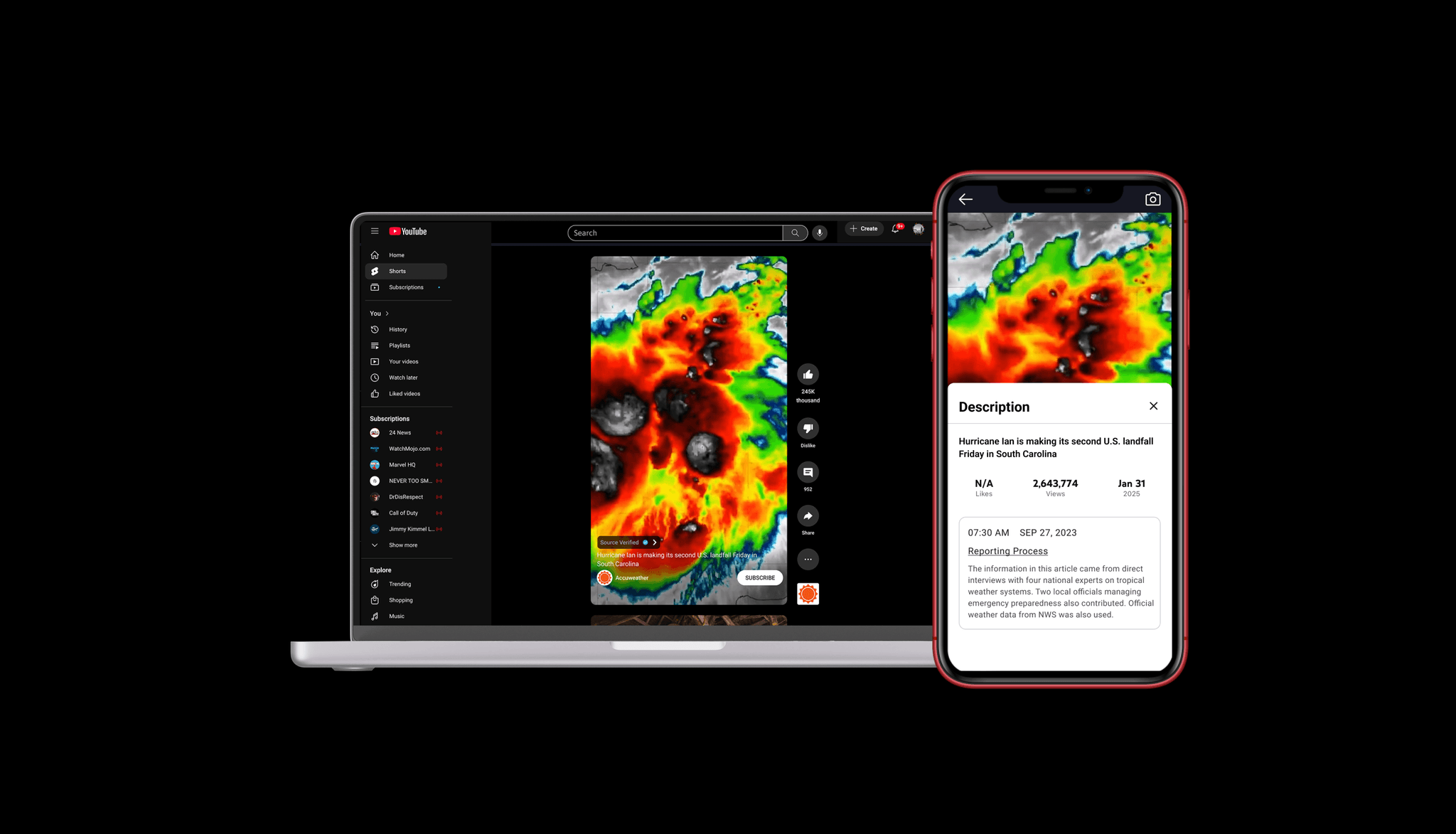
As a UX design intern at Google (in partnership with ASU), built the credibility framework behind Google News' "Verified" badge — a lightweight way for readers to check a story's source and reporting process without leaving the feed. Validated through two rounds of user testing and approved by Chrome's organic search team; the same framework was later extended to YouTube Shorts.
Introduction
Tasked with envisioning a scalable system to combat misinformation and build user trust within Google News. An internal audit later revealed Google News already had real trust infrastructure running in the background — credibility scoring, fact-check integration, editorial verification — none of which was ever visible to the person actually reading the story.
Problem
How might we build user trust in digital news by making a story's origin, credibility, and reporting process more visible — without disrupting the fast, skim-heavy way people already read news, especially during high-pressure moments like elections or natural disasters, when misinformation spreads fastest and users have no way to tell a verified source from a speculative one?
Research
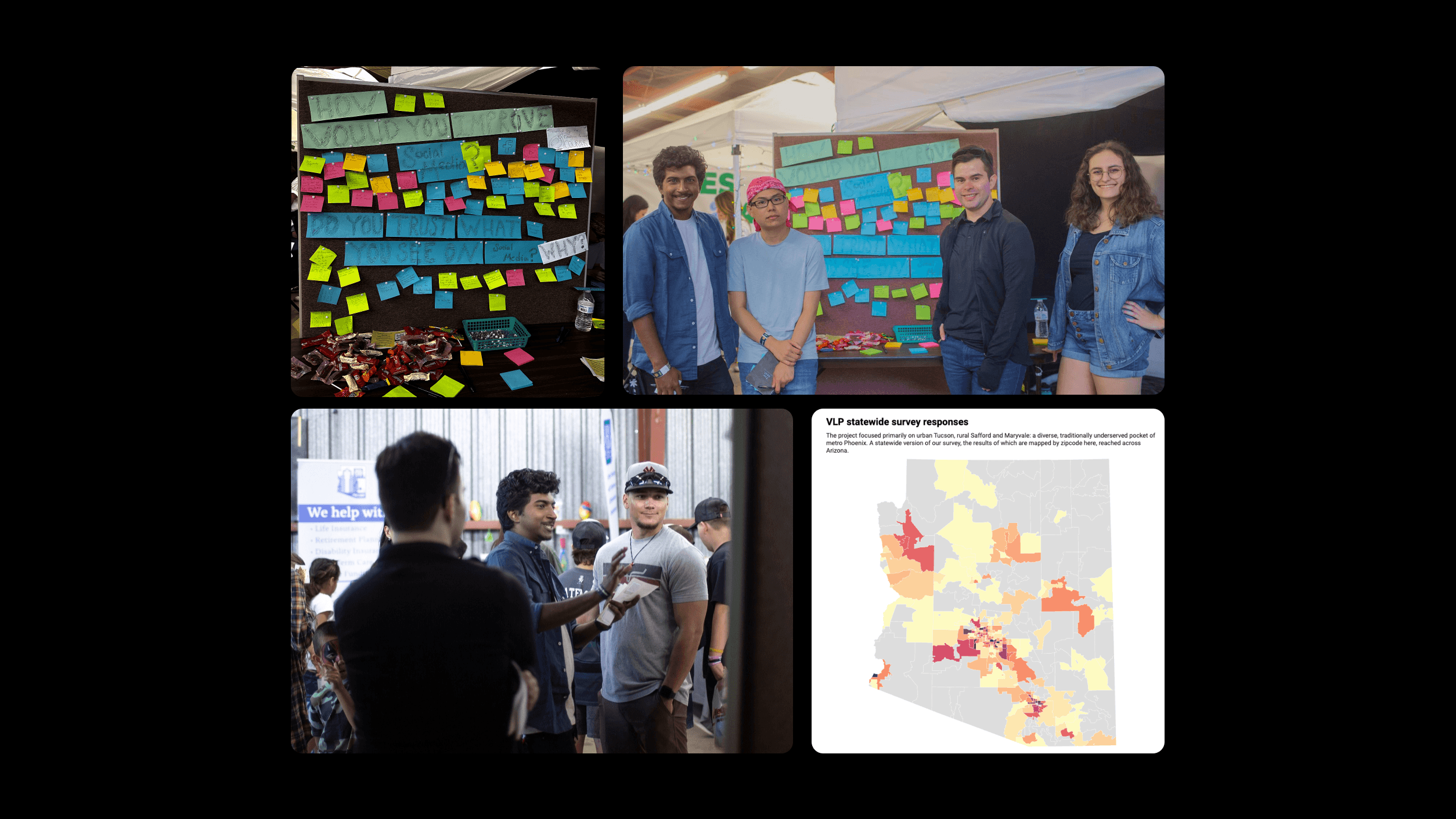
Ran user interviews and large-scale surveys — finding people treated publisher logos and search ranking as a proxy for trust and typically scanned 5-7 headlines a session without ever checking sourcing — alongside an internal audit with Google's Content Policy and Search teams, which surfaced unused trust signals and showed manual fact-checking couldn't keep pace with breaking news. Full research detail is in the presentation deck.
"
"They all look the same—how do I know which one to trust?"
Ideation
Explored where a trust signal could live inside News' existing Material Design card layout, landing on a "Verified" badge and timestamp that expands in place to reveal the reporting process — then brought it to Chrome's organic search team for review, since it touched Search's shared carousel component. Full exploration is in the presentation deck.
"
"I've never heard of this first one... but the verified badge makes me think it's at least been vetted."
Solution
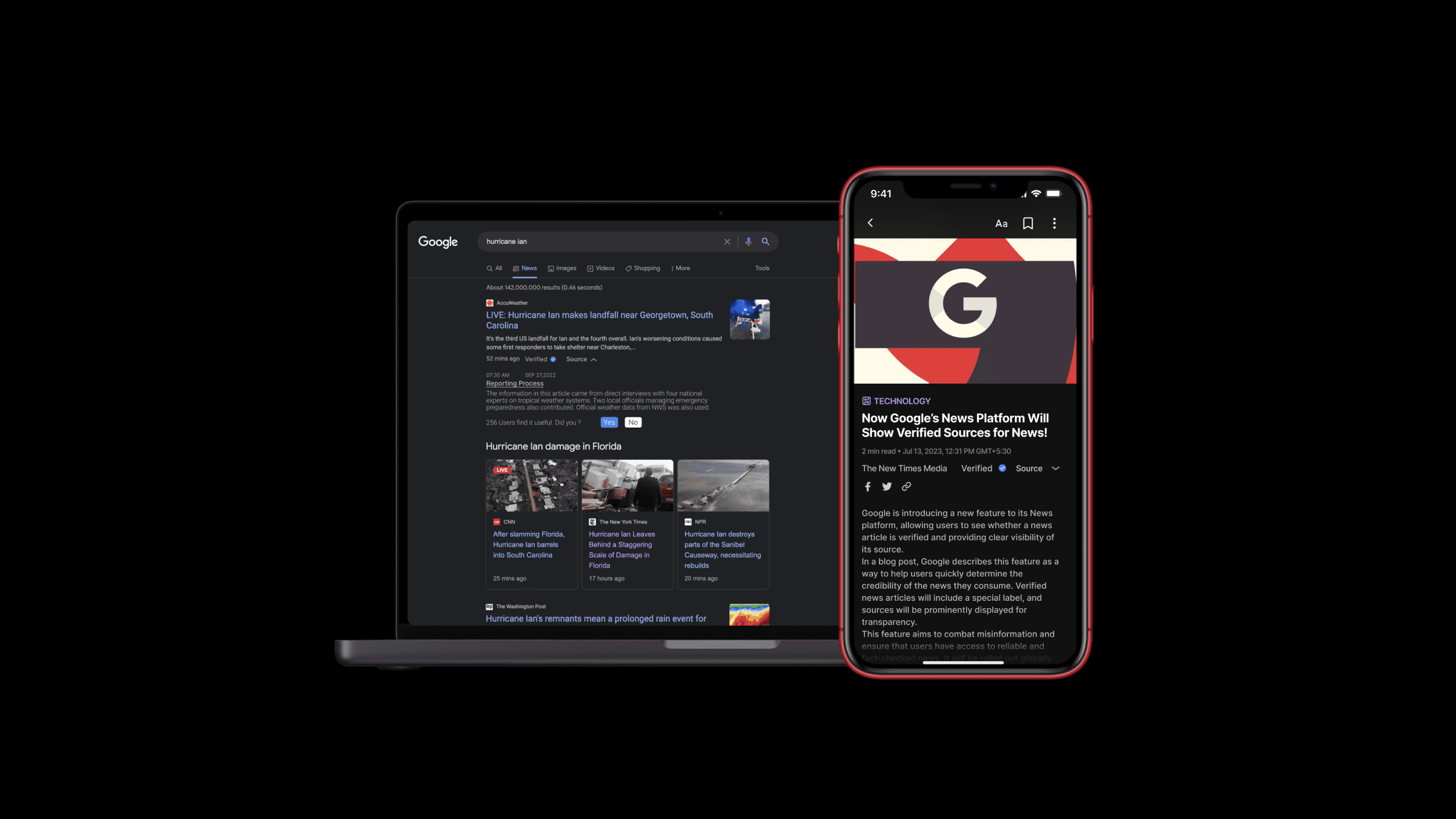
1. A badge that earns trust, not just claims it — A "Verified" badge and timestamp sit visibly on the card at a glance; tapping it expands the card in place to show sourcing, expert validation, and a direct engagement prompt ("256 users found this useful — did you?"), turning invisible editorial rigor into something a reader can actually check.
2. Built on what already existed, not against it — Rather than inventing a new interaction pattern, used Material Design's own guidance that card content can expand and scroll in place on desktop — which Chrome's team confirmed was not just acceptable but the intended pattern for exactly this kind of layered content, clearing the design for the shared Search carousel without a fight over convention.


Impacts
Two rounds of comparative user testing (with the badge vs. without, familiar publishers vs. unfamiliar ones) showed the badge measurably shifted which article people chose to trust and click, even for sources they didn't recognize. The same credibility framework was later adapted and extended to YouTube Shorts, where it drove a 70% increase in perceived transparency and an 85% increase in user trust.